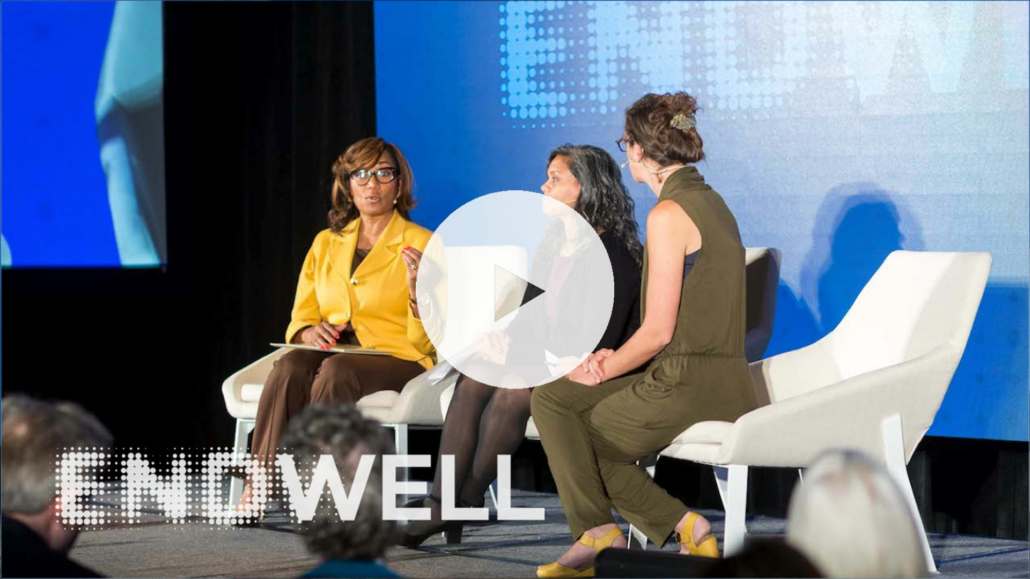

Who are we when we step into the room of a seriously ill child? For pediatric palliative physician Justin Baker, this question defines his work. He challenges us to cultivate the courage to meet families with deep compassion—and to build systems of care that do the same for patients of every age.
Watch next
Courageous Compassion: Lessons from Pediatric Palliative Care
2025 ⸱
Justin Baker, MD
Share
About the speaker(s)
As a Palliative Care physician leader and visionary (AAHPM awards); Pediatric Oncologist; and Phase I and Palliative and End– of– Life Care Clinical Investigator, Dr. Baker is intimately aware of the distress experienced by children with advanced illnesses and the ethical and end–of–life/bereavement issues surrounding their disease progression. He currently serves as the Inaugural Chief of the Division of Quality of Life and Pediatric Palliative Care here at Stanford, as well as the Director of the Quality of Life for All (QoLA) Program. Additionally, he serves as the Associate Chief Quality Officer for Patient Experience and Holistic Care. In his past career at St Jude Children’s Research Center, he started the St Jude palliative care program, created two home-based pediatric palliative care teams and served as the director of the Pediatric Hematology/Oncology Fellowship Program for more than a decade.
His research expertise is in the study of innovative models of palliative care, grief and bereavement, patient-reported outcomes, and pain and symptom control. He has received significant extramural funding for his research and has participated in >100 studies related to pediatric palliative care. He is also deeply committed to training up the next generation and to mentorship. He has mentored/co-mentored more than 60 post-docs, fellows, and junior faculty members. He has authored >300 academic works on palliative care subjects.He has received many awards for his work including the prestigious Hastings Center Cunniff-Dixon Award. He was also named an American Academy of Hospice and Palliative Medicine (AAHPM) Inspirational Leader in Hospice and Palliative Medicine. Most recently Dr Baker was named an AAHPM Visionary in Hospice and Palliative Medicine.He is a recognized international expert and leader in the field of Pediatric Palliative Care as well as a highly sought-after speaker (see TEDxMemphis talk) and mentor with a track record of success.
Good morning, Endwell. No, no, no, no. I said good morning, Endwell That was more like it. Well done. I am Dr. Justin Baker, and at Stanford Children’s, I’m affectionately known as the Chief Koala Bear. I’ve got a question for you all. Who wants a koala? This side is more into it. Ah. Oh, what a catch. You just caught courageous compassion in plush form. That is awesome. More to come. There’s more to come. Don’t worry. I know what you’re thinking, “Did this guy really bring a stuffed animal to End Well?” No, I actually brought many. So I’m so grateful to be with you here today because this koala, it’s not just a toy. It’s something so much more than that. It’s an actual movement. See, at Stanford, Q-O-L-A, QOLA, means quality of life for all. Every child, every family, every moment, no exceptions. As that chief koala bear, I’ve spent my career, I’ve dedicated all of my time to trying to figure out how can I help all children and families live fully, even in the midst of serious illness, death, and grief. I spend my days thinking about how can I make every day the best day possible. In fact, every moment the best moment possible. That’s my one thing. That’s the heartbeat of everything I do. That’s what this koala stands for. In order for us to do that, we have to rethink how we talk about suffering. It takes courageous compassion. Courageous compassion means we lean into suffering. We don’t avoid it, and we relentlessly pursue quality of life for all. If it’s okay with you, I wanna take you back to when I was a little kiddo. I was a little bit odd. I always knew I wanted to be a pediatrician. I just wasn’t really sure what a pediatrician was. I thought I was gonna come in and sing songs and play Legos and, you know, maybe do an art project or two, and probably play some guitar and ah. The other thing I thought is that while I was doing that, I’d write a prescription for some Augmentin and help with the kid’s ear infection. So maybe I got that part right. I don’t know if some of you think that’s what pediatricians do, but I’m sorry to burst your bubble. It’s a little bit more than that. Now, what I wanna tell you is I’ve always been passionate about helping children, but I’ve been a little bit naive. But that naivety, you can kinda say, still kinda stays today. When I got to medical school finally, I was a little bit disappointed, to be honest. It felt like it was all about numbers and lab values. It felt like it was all about disease and pathophysiology. I got disillusioned. I asked myself, “Where is the person? Where are the kiddos?” I almost quit But then when I was a third-year medical student, I met somebody that I want you to begin to picture in your mind. His name was Jake. Jake had freckles and red hair. He had a terrible liver tumor. I met him in San Antonio, Texas, when he was suffering another recurrence of that cancer. It was a very difficult time. Jake had already underwent so many surgeries. He had received huge amounts of highly toxic chemotherapy. He had even undergone a liver transplant. Jake and his parents were really struggling. They were hoping truly for an impossible cure. That’s when I saw somebody do something radically brave. A palliative care doctor, my mentor and friend, came in and met with Jake and his family. He didn’t talk to them about a new chemotherapy regimen. He didn’t talk to them about the cancer at all. In fact, he looked at Jake and he said, “Jake, what is most important to you right now? Given what you’re up against, what are you hoping for?” I remember that moment like it was yesterday. I had never heard that question before. What are you hoping for? It had a profound impact on Jake. You saw him begin to get emotional. You saw him, through his tears, then say, “I wanna go home. I want to play with my dog. I want to try to golf again.” Boy, was that a shift in paradigms. So we did it. We made it happen. We helped him focus on his quality of life. We sent him home. We talked to Make-A-Wish. They got him a brand-new set of Nike golf clubs. They were gorgeous. I was actually a little bit jealous. This doctor and I, we went to Jake’s home, and instead of focusing on his cancer, we thought about how can we help him strengthen, how can we help him with his stamina so that he can go out and golf again? A couple weeks later, I got the coolest video. It was this video of Jake hitting a drive down the middle of the fairway. And just like that person who caught the koala, he was smiling from ear to ear. That smile, it was pure joy. That’s why I love what I do. Jake taught me many things. First and foremost, he taught me that palliative care is not about giving up. Palliative care is all about hope. In fact, say that with me, hope Palliative care is all about fighting for the person, not simply fighting against the disease. Jake taught me many other things, but one of the things that was most important is that he taught me that pediatric palliative care is my life calling. It’s why God put me here on this earth. Every single day, I get to work with this amazing team. Every single day, I get to work with incredible patients like Jake. Every single day, I am blessed to do my work. The other thing that happened that day, the koala was born because Jake taught me that palliative care is all about quality of life for all. Who wants it? I feel like throwing koalas is a little bit radically brave, by the way. Like, I feel like that’s– I feel like that qualifies. Now, I’ve gotten to work in this field now for a long time, and I’m so grateful for the opportunity. It’s interesting because the questions really haven’t changed that much across time. I’m always asked, “Is pediatric palliative care a big need? Are there really that many children who need pediatric palliative care?” Well, I’ll tell you, the answer is absolutely. I travel all over the world, and I’ve seen it firsthand. In fact, twenty-one million children worldwide need pediatric palliative care. Twenty-one million. Let’s say that together. Twenty-one million. When people realize the enormity of the need and when they recognize what pediatric palliative care is all about, they think the same thing that you’re thinking: How do you do what you do? Well, I already told you, God put me on Earth to do this work. I also told you what a joy and a privilege it is to work with these precious kiddos. But I wanna teach you something else. Pediatric palliative care is the most beautiful, bold, brave field in all of medicine. Kids are incredible. They are growing while fighting their disease. They say and do the most hilarious things. One of my favorite parts? They love my koala. Makes me a little bit biased. I’ll tell you one of the other great things that we get to witness is they’re doing the work of childhood. The work of childhood is going to school. It’s playing without a care in the world. You know what our patients are doing? Our patients are living. It’s not that they are waiting to die. Do you know what our job is? Our job in pediatric palliative care is to fill every single day, every single moment, to take it and to infuse it with joy. How awesome does that sound? See, pediatric palliative care is actually pretty radical, and these kids are very brave. The other thing I want to tell you about pediatric palliative care is that it is truly unbelievably rebellious. You can probably tell I have a bit of a rebellious spirit, but pediatric palliative care is a true rebellion. In fact, it is disruptive. I want you to think with me about the field of healthcare. It is a totally broken system. Medicine is a business. Do we think it should be a business? No. No. But unfortunately, we worship innovation, medicine chases metrics, celebrates procedures. Hospitals compete for the newest tools, for the fanciest scanners, for the most cutting-edge treatments. And in the middle of all that noise, what gets lost? It’s the human beings. Where are the precious kiddos? Can I tell you what’s the antidote to all of that? Pediatric palliative care. Because in pediatric palliative care, we’re not thinking about the newest medicine, we’re not trying to imagine the fanciest technology. In fact, what we use most often is the oldest medicine in history. It’s all about presence and human connection. That’s something all of us can do. We can be present and connect with that person right in front of us. We can hold somebody’s hand, we can look them in the eye, and we can say, “You are not alone. I am here with you. What are you hoping for, and how can I help?” What’s amazing is medicine, when you take away all the other noise, all the other craziness, it comes down to something astonishingly simple. It’s love, and in a healthcare system that has lost its humanity, that is truly revolutionary. Our medical system, our healthcare system is about love, but we’ve lost it. I wanna share with you why I labeled this courageous compassion. Compassion is my very favorite word. It comes from Latin com and pati, com, with, pati, to suffer. It literally means to suffer with. Compassion means we’re turning towards suffering. Compassion itself is not enough, though. We have to be reminded, we have to recognize that in the middle of what we’re doing, we have to be courageous. We have to lean into that suffering. We have to be brave enough to say the difficult things, to turn into pain, not run away from it. I wanna tell you something really interesting. In order to do that again and again, you need something else. You have to have grit. Grit gets us back there again. It’s the quiet, it’s the persistent, it’s the passionate perseverance to overcome and to lean into the middle of this. So we’ve gotta do this together with grit and courageous compassion, and it takes everyone here in this room. That’s why I’m so thankful for End Well 2025. I’m so thankful for this theme of radical bravery. Because Jake’s care, it’s not about better hospital care. What it’s about, it’s about community-based compassion. It takes all of us, and it fa- in fact, it takes all of you. It takes an incredible amount of community-based, courageous compassion. That’s what the Quality of Life for All initiative is all about. This is not about a Stanford program. This is about a movement. It’s a movement to take these palliative care principles, the things you’re gonna lear- learn today, and move it into the community to support patients and families like Jake’s. So I wanna be– I wanna urge you on to be courageous enough to face suffering. Be compassionate enough to open your heart and connect. I want you to be gritty enough to keep showing up again and again as we pursue quality of life for all of these precious kiddos and their families. I need you to join me in leaning into suffering. Because when we lean into suffering together, we don’t just help others end well. We help the whole world live well. Thank you. One last koala? Thank you.
Show more
Join the Movement
Get the latest news and fresh ideas from the frontlines of all things end of life.