Social Workers Take the Lead on Helping Teams Navigate End-of-Life Conversations
How social workers can step into leadership roles and transform end-of-life care through courageous conversations.


October 8, 2025
Let’s address the elephant in the hospital room: Does wearing a white coat automatically make someone better at having difficult conversations about death and dying? Medical authority certainly commands respect. But many of the most meaningful end-of-life conversations happen outside sterile examination rooms, in spaces where human connection can thrive.
That is where social workers excel.
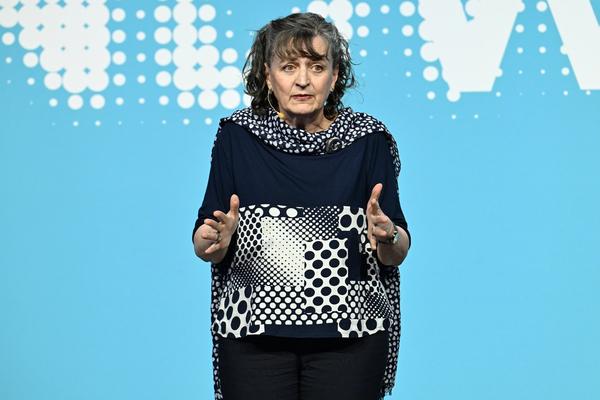
Anao Zhang, MSW, PhD, a researcher specializing in adolescent and young adult cancer care, believes social workers should be “at the forefront of addressing and confronting” the challenges surrounding end-of-life conversations.
The key word is leadership.
Beyond the Hierarchy
The Austin Model
Imagine entering a cancer treatment center where the social worker is leading the care team rather than occupying a supporting role.
That approach took shape at Dell Medical School’s patient-centered oncology clinic in Austin, Texas.
Guided by Barbara Jones and other leaders at Dell Medical School, social workers became the first point of contact for patients. They coordinated the full care team, including oncologists, nurses, pharmacists, and chaplains.
The clinic represented a cultural shift toward relationships, communication, and coordination.
This model extended beyond the clinic. It was part of a broader vision that included interdisciplinary education and an academic Department of Social Work embedded within the medical school.
Together, these efforts redefined how palliative care could be delivered and taught.
The Austin Model showed that social workers bring essential leadership skills to healthcare. They build therapeutic relationships, facilitate difficult conversations, coordinate complex needs, and support patients, families, and care teams.
The Challenges of Caring for Young People
Working with adolescents and young adults with cancer presents particularly difficult ethical and practical questions.
A 20-year-old with terminal cancer may think very differently about dying than their devastated parents. A 17-year-old may legally be unable to make independent medical decisions while desperately wanting control over their end-of-life care.
These situations require what Anao calls radical bravery: the courage to navigate complex family dynamics, advocate for a young person’s autonomy, and begin conversations that everyone else would prefer to avoid.
The Express Train Problem
Imagine end-of-life care as a train route.
Many patients are placed on an express train that travels directly from pursuing a cure to entering hospice, passing every important stop in between.
What would change if each meaningful conversation happened one stop earlier?
Social workers could help patients and families explore their values while treatment continues. They could help them understand a prognosis without extinguishing hope, make meaning before a crisis occurs, and prepare for different outcomes while preserving quality of life.
Hope can take many forms.
It may mean attending a daughter’s graduation rather than living another 50 years. Reaching that graduation can still be a miracle worth fighting for.
Reframing Miracles
Anao offers a thoughtful adaptation of a familiar question from solution-focused therapy.
Instead of asking, “If a miracle happened, what would your life look like?” he asks:
“If a miracle happened, assuming your cancer trajectory continues as it is, what would be something wonderful?”
The revised question acknowledges medical reality while preserving the possibility of joy, meaning, and hope.
It creates space for a person to imagine what remains possible within the life they have.
Supporting the Care Team
Social workers often become unofficial therapists for the entire medical team.
Doctors break down. Nurses cry in supply closets. Everyone carries the emotional weight of caring for people who are dying.
Anao recalls a nurse practitioner asking him to provide what was essentially an impromptu therapy session. The request felt uncomfortable, but the need was clear.
Supporting patients and families while also caring for healthcare providers requires considerable skill and strong professional boundaries.
It also reveals how social workers function as part of the emotional infrastructure of a healthcare team.
Taking Up Space
Anao makes a sobering observation:
“I get the level of attention that I got as a social work researcher because of my PhD, not because of my MSW.”
Social workers often have to fight for recognition and respect within medical hierarchies.
Radical bravery means taking up space anyway.
It means speaking honestly with other members of the care team and advocating for patients even when your voice carries less institutional authority than the person wearing the white coat.
A Profession Built on Relationships
Anao describes social work as “a profession of relations.”
Medical professionals may concentrate on treating disease. Social workers focus on the relationships, circumstances, and values that shape how a person experiences that disease.
They understand family dynamics, facilitate communication, identify psychosocial needs, and help teams navigate cultural and spiritual concerns.
They also advocate for autonomy and dignity.
These abilities become especially important near the end of life, when medical decisions are inseparable from personal values, family relationships, and questions of meaning.
Making Meaning Earlier
Research suggests that discussing death earlier in the course of cancer may accelerate the process of meaning-making.
That can be beneficial.
When people have time to consider their mortality and make sense of what they are experiencing, they may approach their remaining time with greater intention and peace.
Social workers can help patients and families identify what matters most, explore their beliefs about life and death, process anticipatory grief, and create opportunities for legacy and connection.
Practical Steps for Social Workers Ready to Lead
1. Start Early and Start Small
Begin conversations about values and priorities well before someone is actively dying.
Frame them around quality of life and what matters most to the patient.
2. Model Courage for the Care Team
Be willing to raise difficult subjects during team meetings.
Ask the question others may be avoiding:
“Has anyone talked with the patient about how they understand their prognosis?”
3. Educate Your Colleagues
Help other members of the care team understand what palliative and supportive care actually provide.
Challenge the assumption that receiving this care means giving up.
4. Support the Supporters
Recognize that your colleagues may also be struggling.
Create opportunities for healthcare providers to process their emotional responses to caring for patients.
5. Advocate Within the Hierarchy
Use your understanding of the patient and family to influence medical decisions.
Your knowledge of family relationships, living circumstances, and psychosocial needs is essential to good care.
The Cultural Shift Healthcare Needs
Medical expertise remains vital. Social work strengthens that expertise by bringing relationships, communication, and a fuller understanding of the patient into the center of care.
We need healthcare cultures where difficult conversations happen routinely rather than only during a crisis.
Psychosocial concerns should receive the same serious consideration as medical ones. Social workers should be recognized as essential leaders. End-of-life planning should begin with diagnosis rather than wait for a terminal prognosis.
Realistic planning and hope can coexist.
A Moment of Radical Bravery
Every social worker has encountered a situation in which an important conversation needed to happen but no one knew how to begin it.
Every social worker has seen patients and families struggle with information they were not prepared to receive.
A moment of radical bravery may mean asking a patient what living well means while treatment continues.
It may mean suggesting a family meeting, speaking up when there is a gap in communication, or advocating for palliative care alongside curative treatment.
Sometimes it means sitting beside someone and asking:
“What are you most worried about?”
The Ripple Effect of Brave Conversations
When social workers lead conversations about the end of life, the effects extend beyond one patient or family.
Communication within the care team improves. Patients experience care that is more aligned with their values. Families may feel less distress and face fewer complications in grief.
Healthcare providers may also rediscover meaning and satisfaction in their work.
Over time, those conversations help create more humane healthcare cultures.
The Future of End-of-Life Care
The future of end-of-life care depends on more than improved pain management or more comfortable hospice facilities, though both are essential.
It requires healthcare systems in which people who are dying and those who love them feel heard, supported, and empowered to make decisions grounded in their values.
Social workers are uniquely equipped to lead that transformation.
They need the radical bravery to step forward and claim their place as leaders in end-of-life care.
When people are at their most vulnerable, social workers have both the opportunity and the responsibility to advocate for them.