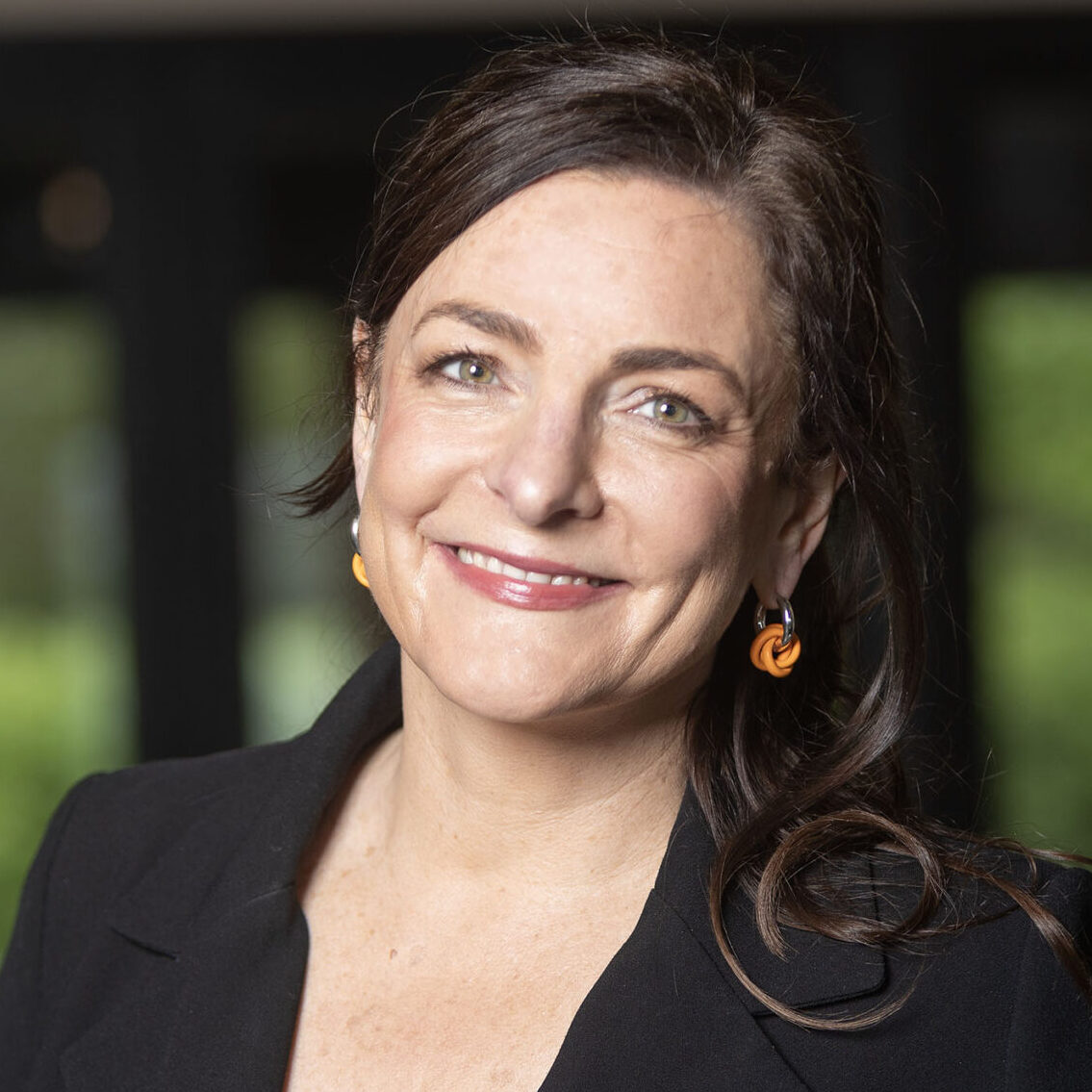
Australian entrepreneur Melissa Reader is challenging conventional wisdom about artificial intelligence, conversations and care through the last stages of life. As founder of Violet, an AI-powered platform designed to support people through grief and loss, Melissa brings a unique perspective to the intersection of technology and human experience—one forged through profound personal loss and strengthened by rigorous leadership training.
In a recent conversation with End Well’s executive director, Tracy Wheeler, Melissa shared insights about reimagining AI for human connection, the challenges of innovation in healthcare, and why technology must remain grounded in human wisdom.
Turning tragedy into purpose.
Melissa’s journey began with tragedy. “My husband Mauro’s diagnosis with late-stage renal cancer came as a complete shock. We were a typical family, happily married, and had just welcomed our third child into the world,” Melissa recalls. “Instead of spending our last year-and-a-half together with the right information, support and a growing acceptance of what was to come, we were caught in a torrent of medical visits, doctors’ consultations, treatments and surgeries.”
The aftermath was equally difficult. “I have a profound sense of regret when reflecting upon Mauro’s death, particularly how we spent our last months together, our lack of acceptance of the inevitable, and our lack of preparation,” she reflects.
Rather than retreat from this pain, Melissa chose to transform it into purpose. In 2011, she was selected for the Benevolent Society’s Social 12-month Leadership Australia program, and later deepened her expertise through Harvard University’s Kennedy School Executive Education program in Adaptive Leadership, graduating in 2016.
Beyond the Chatbot: Reimagining AI for Human Connection
“If anyone uses the word chatbot around me, I just stop them and say, this is not a chatbot, it’s a digital guide,” Melissa explains. Her distinction isn’t semantic—it’s fundamental to understanding how AI can serve humanity rather than replace it.
“We have thousands of hours of evidence-based support programs that our human guides have delivered, and that’s what we’re using to train and deliver highly humanized AI-enabled care,” she explains.
“For instance, we’ve done a lot of work with Dr. Kathryn Mannix on the voice design, on natural pauses in a conversation, phasing, sequencing—like an empathetic conversation.”
“As much as we would like to maintain the ideal of matching humans with humans on a 1:1 basis, we can no longer pretend that we have the fiscal and human resources to meet the scale of need this way. In the face of this mathematical reality, our best option for driving meaningful improvement is to strategically deploy human workers where they can add the most unique value while supplementing their efforts with thoughtfully designed, humane technology.”
The Innovation Triad: Protect, Conserve, Let Go
Melissa frames innovation through what she calls a triad: what you protect and conserve, where you innovate, and what you let go of. In developing AI for end-of-life care, this means protecting human connection while conserving the wisdom of experienced guides and letting go of systems that fail to meet people’s actual needs.
“My cofounder Yaniv Bernstein and I talk a lot about the idea of balancing humanity and technology,” she explains. “How do we think about this balance in a way that genuinely embodies the very best of the human experience?
Meeting People at 3 AM, Not Just 3 PM
The gap between institutional schedules and human need runs through much of Melissa’s work. She points to Australia’s federally-funded Carer Gateway program, which, after five years, has reached less than 5% of its target population.
“The sandwich generation carer is busy with their work commitments, busy with their kids, busy with their lives. They can’t drop everything to go to a morning tea to learn about support options. We need to find new ways of reaching them”.
“We’re finding AI is very good in ‘meeting people where they are’ at a time that works for them, delivering an empathetic, structured intake conversation that can help you learn, and can very personalized experience at midnight in Mandarin, for instance,” adds Melissa.
Culture Change Starts at Kitchen Tables
Rather than focusing solely on clinical outcomes, Melissa prioritizes cultural transformation—the kind that happens in everyday conversations rather than medical settings. Melissa believes that: “Until we change the culture around the kitchen table, we’re not going to see uptake in the programs that can make a difference in people’s end-of-life experience or that of those who are grieving them.”
Melissa has witnessed this challenge firsthand: “I’ve been having this exact discussion with a lot of providers who say, 80% of our aged care residents have an advanced care plan. I’m like, great, where is it? Oh, they don’t know. Who’s talked about it? I don’t know. What value is it actually providing, other than making you deliver on a compliance requirement?”
Strategic Implementation in a Fast-changing World
Even with institutional prodding, the reality is that fewer than 14 per cent of Australians have documented end-of-life plans, which can lead to inappropriate medical interventions and misallocation of valuable healthcare resources.
“By 2032, 65,000 Australians will turn 85 annually, five times today’s numbers. Systems are not ready. Families are not prepared,” Melissa says.
“Australia, and many other Western nations face an unprecedented elder care crisis: this most complex and demanding form of caregiving is growing 49% faster than overall carer rates, crowding out resources for other critical needs. By 2030, 1 in 10 Australian adults will have elder care responsibilities—predominantly sandwich generation families and elderly people caring for other elderly people. This unsustainable trajectory demands immediate innovation in how we combine strategic human deployment with thoughtful technology to meet the defining challenge of our ageing society.”
And yet, we can’t expect AI alone to solve these issues: “With all the fervor about AI being able to solve everything practically overnight, we also need to slow down and ensure that what we’ve trained it on reflects people’s lived realities of grief and loss and that what we’re building delivers excellent, human-centered care.”
Looking Forward: Innovation as Alignment
Rather than imposing technological solutions, Melissa is creating tools that invite people into deeper conversations about what matters most. “We’re not trying to persuade people to do something differently,” Melissa notes.
“What we’re trying to address is the misalignment between the experience people want in this stage of their lives, and the experience that they get at great human and economic cost,” says Melissa. “We’re not trying to spin off a new version of this experience. It’s actually grounded in the things that people want, in the conversations that they have.”
As AI reshapes industries and institutions, Melissa’s work offers a compelling model—one where innovation invites alignment between what people want and the systems that serve them, where technology amplifies rather than replaces human wisdom, and where the most profound questions aren’t about what machines can do, but about how they can help us remain more fully human and connected to care in our most vulnerable moments.