Creating Sacred Moments
Barbara Karnes on End-of-Life Care and Death Doulas
October 24, 2025
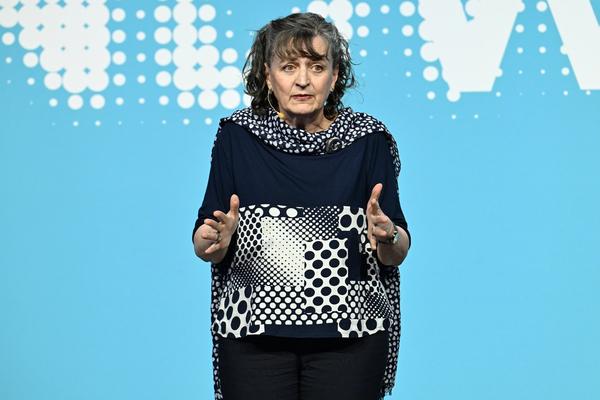
Barbara Karnes, RN, has been one of the most trusted voices in end-of-life care for more than five decades. Her booklets, including the now-iconic Gone From My Sight, often called the “little blue hospice book,” have reached millions of families, offering comfort, clarity, and guidance in moments of fear and uncertainty.
Barbara’s wisdom did not come from following the medical model. It came from years of listening, observing, and, as she puts it, “making it up as I went along.”
“There wasn’t any emphasis on the disease. It was on the person. How can I make this person comfortable? How can I help this person find peace with their life? How can I help the family help this person?”
Tracy Wheeler, executive director of End Well, spoke with Barbara about her journey, the evolution of hospice care, and how families can create more meaningful experiences around death.
From Fear to Calling
Tracy: I understand you first sat with somebody who was dying when you were a teenager.
Barbara: Yes. When my grandfather died, I was 14.
Even at that age, adults tried to protect me from death. But their attempts to protect me actually made death more terrifying.
My mother took me to the funeral home. The lights were out, and a candle was lit at the end of the coffin. I thought, “If seeing this is so terrifying, I certainly don’t want to go to the funeral.”
Tracy: How did you end up making this your life’s work?
Barbara: I found a direction in the 1970s, when Elisabeth Kübler-Ross began talking about how Americans failed to care for people who were dying.
When I graduated from nursing school, I thought, “Barbara, you’ve made a huge mistake. You should have been a social worker.”
I got married, had children, and never worked as a nurse within the medical system. But after discovering Kübler-Ross and deciding I wanted to work with dying people, I returned to nursing and took a refresher course.
I believe my gift was that I had never worked professionally within the medical model. I did not carry its assumptions about how people who are dying should be treated.
I literally made it up as I went along.
The emphasis was never on the disease. It was on the person.
How can I make this person comfortable? How can I help them find peace with their life? How can I help the family support them?
Understanding the Dying Process
Tracy: You write about how the body seems to have an intelligence about dying. Do you sense anything else in the room when someone is dying?
Barbara: I believe people know they are dying and know when they are dying.
In the weeks before death, their attention is often no longer focused in the way ours is. Through their words and behavior, I have observed people speaking about and speaking to loved ones who died before them.
That has led me to believe that those who have gone before us may help us move from this world to the next.
I do not know that for certain. But I have come to believe that we do not die alone. We could be on a deserted island, and I still do not think we would be alone.
How that works, I have no idea.
Tracy: You compare dying to labor. Can you explain that?
Barbara: We go through labor to enter this world, and we go through labor to leave it.
That labor often begins one to three weeks before death. At that point, the person is no longer processing things on a purely intellectual level. Their work is to leave their body, and that becomes the focus of their energy.
Rational thinking often begins to recede.
You cannot have a long, serious conversation with a woman who is in labor. You may be able to communicate a little, but her energy and attention are focused on delivering the baby.
It is similar when we are leaving this world.
The Cost of a Late Terminal Diagnosis
Tracy: What happens when someone receives a terminal prognosis very late and is deprived of that preparation time?
Barbara: It takes away the opportunity to put their life in order on many levels.
In the months before death, a person may still be alert, thinking, and processing. They may not share it with anyone, but internally they are asking:
What have I done? Who have I touched? What has my life been about?
It is unfortunate that our medical establishment often lacks the courage to say, “I have done everything I can. We gave it our best effort, and there is nothing more we can do.”
Hearing that gives a dying person the dignity to approach the end of life in the manner they choose.
People need to know that choices remain so they can make their own decisions. Clinicians must have the courage to begin that conversation.
The Hidden Burden of Family Caregivers
Tracy: What do you see happening to caregivers?
Barbara: Family caregivers usually have no idea what to do.
People do not die the way they do in movies. When a dying person does not follow those fictional rules, the caregiver assumes something is wrong.
I created materials specifically to guide caregivers. They are nonmedical and avoid medical jargon because knowledge reduces fear.
Whenever I noticed an area of caregiving that was not being addressed, I wrote another booklet.
Pain at the end of life is different from pain experienced by someone expected to recover. Dementia follows almost none of the usual patterns of dying, except for changes around food.
When my husband was dying two years ago, I learned even more because I was finally standing in the caregiver’s shoes.
Tracy: People come to visit the dying person. What happens to the caregiver?
Barbara: People arrive at all hours. The caregiver opens the door, and the first question is, “How is John doing?”
They visit with John, sit beside him, and then leave.
No one asks the caregiver, “How are you doing? Is there anything I can do? Do you need someone to go to the grocery store?”
The caregiver becomes invisible while carrying all the responsibility and all the anticipatory grief.
They see more than anyone else sees.
Tracy: There is also a significant physical burden.
Barbara: Hospice may provide a hospital bed, commode, or walker, but hospice workers are not present 24 hours a day.
Eventually, the person who is dying will remain in bed, and all of their care will happen there.
Their body is deteriorating. Circulation and blood pressure are changing. Their skin can break down much more quickly, so they need to be turned and repositioned frequently.
They may become incontinent.
Caring for a dying person can require far more physical labor than caring for someone who is expected to recover.
Pain Management in Hospice
Tracy: What is your perspective on pain management?
Barbara: Dying itself is not overtly painful.
A person may be tired. Their body may feel heavy, and they may ache all over. But disease causes pain, not dying itself.
When a disease causes pain, we should do everything possible to keep that person comfortable. But many diseases do not cause pain, and someone does not automatically need pain medication simply because they are dying.
Modern hospice has made narcotics and other medications easier to access. Patients often receive an emergency medication pack containing small amounts of several drugs.
That convenience can make it easier to administer medication without fully asking, “Should we be giving this?”
I receive letters every week from people who believe hospice killed their mother with morphine.
Hospice does not kill people. It is not in a hospice organization’s interest to do so. Most costs occur during the patient’s first week of service, so financially, hospices benefit when patients remain enrolled longer.
The Role of End-of-Life Doulas
Tracy: You have a strong relationship with the end-of-life doula movement. How do you see doulas fitting into care?
Barbara: I love end-of-life doulas.
One reason I love them is that their work resembles what I did. When hospice began, we provided many of the same services end-of-life doulas offer today.
As hospice has become increasingly medicalized, a gap has emerged. Doulas are stepping into that space.
Dying is not a medical event. It is a social, emotional, and spiritual event.
I would like to see hospice organizations employ end-of-life doulas on salary and introduce them during the initial hospice visit.
When the final labor begins and death is days or hours away, the doula would become part of the caregiving team.
Their ultimate responsibility would be to remain with the family through the moment of death and stay until the funeral home has taken the body.
Creating a Sacred Experience Around Death
Tracy: How can families create a more sacred experience around the moment of death?
Barbara: In the hours before death, I would encourage each person present to spend time alone with the dying person.
Even when the person is unresponsive, sit beside the bed. Lie down next to them or cuddle them. Speak from your heart about the good times and the difficult times because no relationship is perfect.
After everyone has had private time, gather together for a vigil.
Keep the lights on if you like. Play music in the background. It does not have to be harp music. It can be the Rolling Stones if that is what the person loved.
When death approaches, I would like someone to serve as an invisible conductor, gently guiding the family through what is happening.
They might say, “Look at how Dad is breathing. He is going to take a few unusual breaths. That is okay. Say goodbye. He is almost gone.”
After the death, I would say, “Dad has died. Why don’t you all go into the living room and make some coffee? I am going to tidy the room, and then everyone can come back and say goodbye.”
Alone, I would wash what needed to be washed, straighten the body, fold the hands, put on a clean sheet, raise the head of the bed slightly, and remove the medications and medical equipment.
Then each person could return and spend time alone with Dad.
After everyone had said goodbye, I would call the funeral home and remain until they arrived.
When they came, I would represent the family and stay in the room while they placed Dad on the gurney.
After the body was removed, I would change the bottom sheet, put on a fresh pillowcase, and make the bed. I would leave a light on and place something meaningful on the pillow, perhaps a photograph, a rosary, or a flower from a bouquet.
Rooms hold memories.
We want that room to hold a positive memory. Sad, certainly, but also peaceful.
By transforming it into a memorial space, we create a gentle memory rather than a frightening one.
A More Person-Centered Future
Tracy: What do you hope for the future of end-of-life care?
Barbara: I would like to see less emphasis on the physical aspects of dying and more attention paid to its emotional, social, and spiritual dimensions.
We must recognize that the caregiver deserves just as much consideration as the person who is dying.
Our medical model treats diseases that people have.
End-of-life care supports people who happen to have diseases.
The focus needs to remain on the person.
I would like the entire medical system to care for people who have diseases, addressing the emotional and mental dimensions of personhood alongside the physical.
You cannot heal only the body. True healing also involves the emotional and mental dimensions of who we are.
Preparing Before a Crisis
Tracy: Do you have any final thoughts about preparing for these experiences?
Barbara: Knowledge reduces fear.
From age 18 onward, everyone should have an advance directive and designate a durable medical power of attorney.
When we learn about the end of life before we need that knowledge, we can absorb it without our emotions becoming overwhelmed by what we are witnessing.
I would like to see more end-of-life education offered throughout communities. Churches and other community groups should hold educational meetings and talk openly about dying.
Everyone dies, and everyone will know someone who dies.
The key is gaining knowledge before you need it.