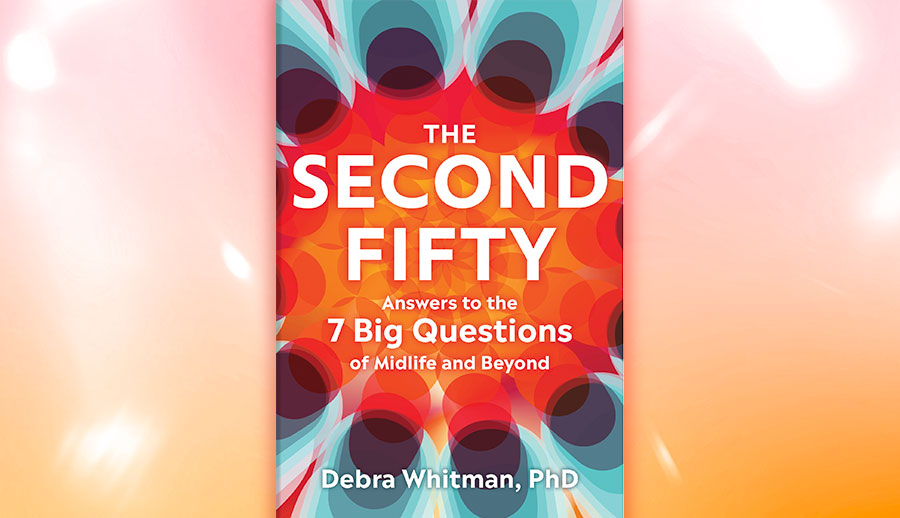
Deborah “Deb” Whitman has spent more than 25 years shaping public policy on aging, first on Capitol Hill and now as Chief Public Policy Officer at AARP. End Well’s executive director, Tracy Wheeler, chatted with Deb about her book The Second Fifty: Answers to the Seven Big Questions of Midlife and Beyond, what surprised her most about death and dying, and how we can all begin to face the end of life with more honesty, curiosity and courage.
Why Write The Second Fifty?
Tracy Wheeler: Welcome. I loved The Second Fifty. So many books feel padded out, but yours synthesizes the tough and the hopeful in a way that actually helps.
Deb Whitman: Thank you. I wanted it to be useful, blending research, data, and voices people could connect with.
Tracy: What struck me most was your honesty. You’ve been in aging policy for more than 25 years, and yet you said when you turned 50, you still had big questions about your own future.
Deb: Exactly. Even after decades working on Social Security, Medicare, and caregiving, I realized I had my own uncertainties. If I did, surely others did too. That realization made me want to combine reflection with evidence, so people felt invited into the conversation rather than preached to.
The Tough Facts About Caregiving
Tracy: You don’t shy away from the hard facts.
Deb: The U.S. spends more on healthcare at the end of life than almost any other country, and yet people still report poor quality, poor communication, and families in financial distress. By 2034, older adults will outnumber children in the U.S. for the first time. That changes everything—housing, healthcare, caregiving.
Nearly 40 million Americans provide unpaid care to adults over 50. That’s valued at more than $600 billion a year, but most caregivers don’t get paid leave or training. Many cut back hours or leave the workforce, shrinking their own retirements. We often think of caregiving as love—and it is—but love doesn’t pay the mortgage. Without support, both caregivers and the system suffer.
Grief and Bereavement: The Forgotten Policy Gap
Tracy: You also write about grief.
Deb: The average bereavement leave in the U.S. is just three days—for the death of a spouse, parent, or child. That’s barely enough time to plan a funeral, let alone to begin grieving. Grief doesn’t vanish when you go back to work—it shows up in health, concentration, and longevity. And when workplaces ignore that, they compound the harm.
Tracy: So caregiving and grief aren’t side stories—they’re central.
Deb: Exactly. If we don’t treat them as public responsibilities, we’ll see more burnout and inequity. But when we invest—through paid leave, workplace flexibility, and financial supports—the payoff is enormous: healthier families, a stronger workforce, and a culture where aging and dying are met with care, not silence.
End-of-Life Assumptions—And What the Data Shows
Tracy: What assumptions about dying were challenged for you?
Deb: Like many people, I hoped for a quick, painless death. But only about 14% of us get that. Most of us will face something different.
I also thought everyone should die at home. But it can be really hard for families, and many homes aren’t equipped. So maybe that’s not right for everyone.
Writing this chapter also sparked conversations with my parents. When I asked my mom about her funeral, she first said, “Whatever you and your brother want.” But when I pressed, she relaxed and said she wanted two funerals—one near the family plot, and one local so friends wouldn’t have to travel. That clarity was a relief to both of us.
Beyond Advance Directives
Tracy: One of the big surprises for you was advance directives.
Deb: Yes. I thought everybody wanted to die at home, and everybody needed an advance directive. That was two paragraphs I was 100% going to write—until I talked to Diane Meier and had to change. She had just released research showing that without also having a healthcare proxy or talking to someone about what you’d want, advance directives are not very effective, and sometimes they lead to unintended results. A good example: people who checked “never put me on a ventilator.” Then COVID hit, and many people survived after short-term ventilator use. If you had ruled it out, you might not have had that chance.
The bigger lesson is that what we think we want changes over time. My dad always said he’d never go into a nursing home. But when his health shifted, he reconsidered. That’s why the most important thing is having someone you trust who can speak for you if you can’t—someone who can evaluate the situation in real time.
Palliative Care: Misunderstood and Underused
Tracy: You write about the gap in awareness around palliative care.
Deb: More than half of family caregivers had never heard of palliative care. Many think it means you’re about to die. In reality, it’s about quality of life. And yet only 17% of oncologists refer patients to palliative care. That’s abhorrent.
Medicare rules don’t help. They force difficult either/or choices between treatment and hospice. We need practitioners to see palliative care as part of medical care, not just an add-on.
Loneliness, Social Connection, and Healthy Aging
Tracy: You also emphasize loneliness.
Deb: Loneliness is as toxic as smoking 15 cigarettes a day. That shocked me. And it’s not just about being married or not—it’s about feeling connected. A chat with a cashier, a wave from the porch, a phone call. These small connections matter.
My dad used to spend an hour at the post office talking with everyone. When we close post offices, we don’t just cut costs—we cut community.
Do People Really Want to Talk About Death?
Tracy: Is death really a taboo topic, or do people want to talk about it?
Deb: The AARP surveys showed something interesting: fear of death and fear of talking about death decline as we age. We’ve been to funerals, we’ve seen how time feels more precious. That said, silence can come from politeness. In my mom’s case, she thought I didn’t want to talk about it. I thought she didn’t want to talk about it. Once we did, it was freeing.
I also sat in on a mock “death café” for geriatric care workers. People loved it. And there are programs like Death Over Dinner and card games with conversation prompts. People are actually hungry for these opportunities.
Making Death Personal, Creative, and Communal
Tracy: You visited New Zealand’s Coffin Club.
Deb: In Rotorua, I met a woman who started the Kiwi Coffin Club. People built and decorated their own coffins—landscapes from hikes, Elvis tributes. It became part social club, part arts-and-crafts, part charity. They even donated coffins to families who couldn’t afford them. It was joyful. We don’t have enough of that in the U.S.—ways to make death personal, creative, and communal.
Signs of Cultural Change
Tracy: You end on a hopeful note.
Deb: Yes. Some workplaces are expanding bereavement leave. Some states are piloting paid family leave that includes elder care. And culturally, we’re seeing more openness—TV shows portraying end of life with nuance, communities beginning to talk more honestly about what matters most.
Tracy: That’s what makes me hopeful, too. Culture shapes policy, and policy shapes culture—it’s a loop.
Deb: Right. Stories make the data real. Every time a family asks, What does a good day look like? Who should speak for you if your health changes? Where would you want care?—that’s a step toward a better system.
Tracy: We can name the hard truths and still believe in our capacity to change.
Deb: Exactly. Aging, caregiving, dying—these aren’t failures. They’re universal experiences. If we meet them with honesty, compassion, and smart policy, we can turn what feels overwhelming into something more humane, sustainable, and even beautiful.
About the Book
The Second Fifty: Answers to the Seven Big Questions of Midlife and Beyond is available now. All proceeds benefit the AARP Foundation.